Author Archive


The good, the bad, and the ugly

The good: Letting inflation rise temporarily during an adverse supply shock, as the EC101 textbooks recommend.

The bad: Holding inflation right at the target when there’s an adverse supply shock and saying to hell with the unemployed, as the inflation-phobic German central bankers recommend.

The ugly: Allowing inflation to fall sharply during an adverse supply shock.

Guess which option America has chosen?

David Siegel interviewed me for an hour on the role of monetary policy during the C19 crisis:

In the near future I expect to do several more such interviews.

Off topic: File this under “nobody knows anything about politics” (a reference to the old Hollywood saying about films.) A few months back I recall Ross Douthat saying that Trump had no chance to win if the US were in recession. Well, we are likely to be in a depression on election day, and he’s still favored to win in the betting markets (albeit only slightly.) If you had told me that a very unpopular president would run for re-election during a depression and have an even chance of winning, I would have thought you were crazy. Especially given the fact that while the epidemic was an exogenous shock (bad luck) he certainly didn’t take it at all seriously for several months. Biden could run commercials of Trump seeming to minimize the threat. The government itself (CDC, etc.) screwed up badly. Even though that’s not primarily the president’s fault, voters used to blame presidents when their administration screwed up.

And Trump will still probably win.

Bernanke and Yellen on monetary policy options

Ben Bernanke and Janet Yellen coauthored a piece in the FT on options for the Fed during this crisis. As you’d expect, there were lots of good ideas, including this one:

Finally, as Eric Rosengren, president of the Federal Reserve Bank of Boston recently suggested, the Fed could ask Congress for the authority to buy limited amounts of investment-grade corporate debt. Most central banks already have this power, and the European Central Bank and the Bank of England regularly use it. The Fed’s intervention could help restart that part of the corporate debt market, which is under significant stress. Such a programme would have to be carefully calibrated to minimise the credit risk taken by the Fed while still providing needed liquidity to an essential market.

Readers know that I’ve long recommended the Fed ask Congress for the ability to buy a wider range of assets during a crisis.  Well, now we are in a crisis.

I look at this issue slightly differently from Bernanke and Yellen, however.  They focus on actions to restore confidence in the credit markets (a valid concern), whereas my motivation is to insure that there are enough assets for the Fed to buy in order to achieve a price level or NGDP level target.  QE won’t have the impact it should unless accompanied by level targeting and a “whatever it takes” commitment to asset purchases.  Allowing for more asset purchases makes that commitment more credible.

In fact, I’d prefer the Fed avoid buying corporate bonds until they ran out of Treasuries and MBSs to buy.  My motivation is money creation, not targeted assistance.

I’m a bit confused by this paragraph:

However, the underlying challenges today are quite different. Back then, the near-collapse of the financial system froze credit and spending; the goal of monetary policy was to restart both. Now, the problem is not originating from financial markets: they are only reflecting underlying concerns about the potential damage caused by the coronavirus pandemic, which of course monetary policy cannot influence.

If they mean that monetary policy cannot undo the medical harm caused by C19, then I clearly agree.  But that’s not how I read the paragraph.  They seem to be saying that monetary policy cannot undo the economic damage of the coronavirus.  That’s not entirely true. Spending and debt are nominal problems, not real problems.

If monetary policy props up NGDP growth with a whatever it takes approach to money creation, then it can make it easier for borrowers to repay loans.  It won’t magically allow cruise lines to service their debt, but faster NGDP growth has a big impact on a wide swath of firms across the American economy.  Debt defaults will be considerably lower if NGDP rises by 5% in 2021, than if it falls by 5%.  Indeed “considerably” is an understatement.

That may be nitpicking on may part, and Bernanke and Yellen are correctly emphasizing the need for the Fed to be very aggressive in addressing this crisis.  My only complaint is that they don’t put quite enough emphasis on the crucial importance of maintaining adequate NGDP growth, even at the cost of inflation.  The health of our financial system depends on it.  Our labor market will also do better with faster NGDP growth, although of course mass unemployment is inevitable in the short run due to social distancing.

There’s little that can be done regarding NGDP in the very short run.  In the very long run we’ll be fine.  It’s the medium term that scares me—2021 and 2022.  Even late 2020.  We need to do more to create positive NGDP growth expectations for 6 months to 3 years out.  Deflation is not the optimal outcome for an adverse supply shock, as any EC101 textbook will tell you.

The big unknowns

We actually know quite a bit about this epidemic. We know the death rate is on the order of 1%, or at least 0.5% to 2%. We know it grows exponentially if left unaddressed. We know that this would eventually overwhelm the hospital system, causing massive death among people who don’t even have coronavirus. We know that most societies won’t allow that to happen and we know that it’s possible to prevent that outcome. So what are the big unknowns?

1. How long until a vaccine, or some other treatment?

2. What’s the tradeoff between economic harm and epidemic control, until we get a vaccine?

China is likely to provide the first test on the second question.  Here’s Bloomberg:

“This coronavirus is more comparable to influenza,” said Ben Cowling, a professor of epidemiology at Hong Kong University, who said it might take two months for fresh cases to emerge in China. “It spreads too easily, and most parts of the world don’t have the ability like China to do containment and control to get rid of it.”

China had no new domestic cases yesterday, for the first time.  It is still getting a few dozen new cases from international travelers, which are all quarantined for 14 days on arriving in China.  So it seems that domestic community transmission can be controlled.

One obvious question is whether other (less authoritarian) countries will also be able to put a lid on community transmission.  I don’t know the answer to that, although based on what we see in other East Asian counties, I’d say “to some extent, but perhaps less so than China.”

But first I’d like to consider a different question—the prospect for China itself.  The above reference to the virus popping up again in two months may sound like bad news, but it actually is not.  I presume that China has the following strategy in mind:

Continue quarantining inbound flights.  Even so, some cases will leak across the land border.  Each time a new domestic case is discovered, they’ll clamp down on that region hard, just as they did with Hubei province.  The hope is that life can go on as usual in provinces not directly affected.  Rinse and repeat until a vaccine is developed.

Normally, I’d be rather pessimistic about this strategy.  But there are two facts that suggest it just might work.  First, a new outbreak would likely be far less severe than the Wuhan outbreak was when the Chinese government finally got around to addressing it.  Thus the new round of tight controls would tamp down on things much earlier than in Wuhan.

Second, the response to the severe outbreak in Wuhan achieved success amazingly quickly.  Thus the second round of controls would probably be effective even more quickly.  China has learned a lot in the past 3 months.  I could see China having 5 or 10 such local clampdowns between now and the time a vaccine is developed, but still keep their economy functioning.

I am less optimistic about countries outside of East Asia.  Experts still don’t fully understand why new infections in East Asia are so low.  Some smaller countries seem to have effective policies.  But Japan does not, and still seems to have a low rate of new infection (although some question the Japanese data.)

I do know that East Asians were much more likely to wear masks even before the epidemic, and this article says the Japanese wash hands more often and touch each other less often than do Westerners (less hand shaking, etc.)  Yet it seems odd these factors would be decisive, given crowded subways in Japanese cities.

I think Tyler Cowen is exactly right when he suggests that if we tried the herd immunity approach then the hospital system would become overwhelmed, we’d freak out, and then we’d abandon the strategy at a time when it was too late to easily control the epidemic.  But he also points out that social distancing is hard to maintain in a Western society, and suggests a possible yo-yo-ing of policy.  The question is whether there’s some amount of social distancing that is consistent with less than a deep depression, but holds the R0 down below 1.0, say to 0.8 or 0.9.  And what amount of social distancing is that?

That’s the 6.4 trillion dollar question, and I have no idea what the answer is.

PS.  This video suggests that one difference between the East and West is that East Asian countries revamped their public heath systems after the SARS epidemic, to be ready for the next one.  The West did not.  Ironically, they have many more hospital beds than the US (per capita) despite spending much less on health care.  They are far more prepared than we are.

Think of “country immunity”.  Once a country has been infected by a major epidemic, it creates institutional “antibodies” making it less susceptible to the next one.


TIPS spreads are a big problem

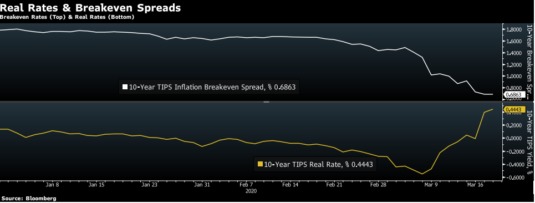
Michael Darda sent me a scary graph showing 10-year TIPS spreads (white line) and the (real) yield on 10-year TIPS (yellow line):

Notice the recent sharp increase in real interest rates in the US. This is exactly what happened in late 2008. Indeed almost everything that’s happened recently in the financial/commodity markets is a replay of what happened in late 2008.

But the rise in real interest rates is especially interesting.  When I point out to economists that nominal interest rates don’t measure the stance of monetary policy, they sometimes say, “Yes, but real interest rates do.”  Actually they don’t, as Ben Bernanke once explained.

But if real interest rates did measure the stance of monetary policy, then policy would have been getting much tighter.  Do my colleagues in the economics community agree with me that monetary policy has been getting much tighter?  No, of course not.

When I used to point out to people that real interest rates rose sharply between July and November 2008, they looked for 101 excuses to explain it all away.  They say that TIPS didn’t accurately measure ex ante real interest rates.  Really?  TIPS are 100% default risk-free, and the real rate of return is locked in.  In the entire investment universe there is no asset that measures risk free ex ante real interest rates more accurately than TIPS.  But they just knew that money couldn’t possibly be getting tighter, so there had to be some other explanation.

Now it is true that the TIPS spread can get distorted during periods of high demand for liquidity, and that the current 0.62% 10-year TIPS spread may not accurately measure inflation expectations.  (Note that the TIPS spread is for CPI inflation; it implies a PCE inflation rate of barely over 0.3% over the next 10 years!)

But even if the TIPS spread is distorted, it doesn’t mean money is not too tight, it just means that it’s too tight for a different reason.  Both of the two possible reasons for low TIPS spreads (low inflation expectations and a mad rush for the more liquid conventional bonds) suggest that money is currently way too tight.

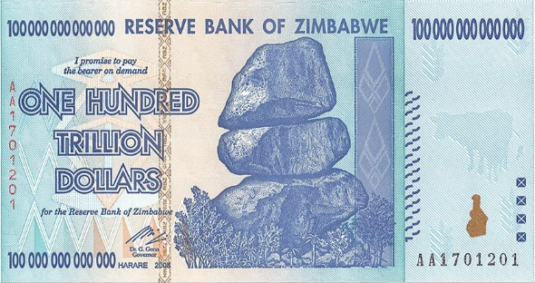
Some will insist that conventional Treasuries are the measure of all things, including real interest rates.  That’s as nonsensical as someone in Zimbabwe in 2008 claiming “all asset values are soaring higher”, not recognizing that actually the value of one specific asset:

is plunging much lower.

Similarly, 99% of assets in the world are like TIPS, with rising real yields, not like Treasuries, with falling real yields. There in no meaningful sense in which one can deny that real interest rates in America are rising.  That doesn’t prove that money is tight, but it suggests that people who view the stance of monetary policy through the lens of interest rates ought to view it as tight.

In my view, NGDP expectations over the next few years best measure the stance of monetary policy, and of course they are also falling.

PS.  If you are in an investment area where liquidity doesn’t matter, say a company investing for insurance or pension obligations 10 years out, why wouldn’t you prefer TIPS over Treasuries right now? Isn’t PCE inflation likely to exceed 0.3% over 10 years?  I’d be interested in responses from someone in the investment community.

PPS.  George Selgin wrote an excellent post in response to Bob Murphy’s critique of market monetarism.

Bob wanted an example of where NGDP targeting would fail to stabilize NGDP.  Suppose you are targeting 2-year forward NGDP expectations, and NGDP in Q2 and Q3 of this year fell sharply.  Then the policy would fail to stabilize current NGDP.  So there’s nothing tautological about our defining tight money as low expectations of future NGDP growth.

PPPS.  David Beckworth has a new Mercatus Policy Brief discussing ideas for addressing the impact of the coronavirus on NGDP.

PPPPS.  I have a new Mercatus Bridge post on the need for new Fed policy tools.

Make it V-shaped (plus news from China)

Yesterday, the number of new cases in China was 21. Interestingly, only one was community transmission (in Wuhan); the other 20 were incoming travelers (who get quarantined.) Some people question the Chinese data, but the trends in other East Asian countries are broadly similar, so I suspect they are roughly accurate.  By Friday, Italy will have more total deaths than China.  Singapore, Hong Kong and Taiwan have 5 deaths, combined.  

Chinese industry is coming back on stream. Here’s Canada’s National Post:

The economic outlook was also brightening, with state planning officials saying China’s economy would return to normal in the second quarter as factories reopened, businesses resumed trading and consumers started spending again.

“Over 90 per cent of large-scale industrial companies in regions outside of Hubei have resumed production, and resumption rates for places including Zhejiang, Jiangsu and Shanghai are close to 100 per cent,” Meng Wei, spokeswoman of the state planner told a news briefing on Tuesday.

The number of railway loadings had returned to normal levels, and civil aviation, ports, and water transportation were all operating normally, she added.

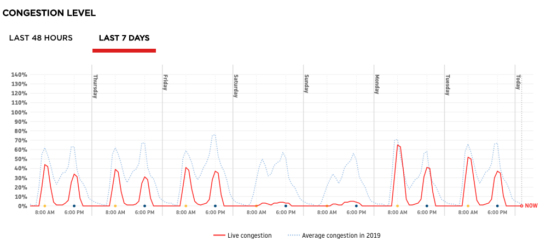
Again, one can question the data. But there is independent evidence from other sources, for instance Beijing traffic is gradually getting back to normal:


Does this mean that the US economy will be getting back to normal in two months? I doubt it. The stock and bond markets certainly don’t think so.

The top priority is getting the epidemic under control. But a close second is getting monetary policy right so that when the epidemic is under control we can have a fast recovery. No reason for this recession not to be V-shaped. We should not let this lapse into another Great Recession.

PS. The Surgeon General said that we can’t emulate South Korea because we are not an authoritarian nation. Are we governed by clowns?

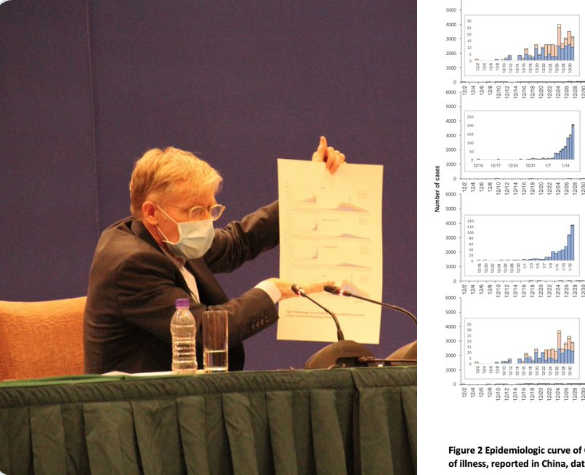
PPS. Good article questioning the received wisdom that masks don’t help. The article links to a picture of a top WHO official wearing one of those totally unhelpful masks when visiting Beijing. I guess it’s not just average people like me that are stupid.

The article also links to a CDC report that says masks do help when you are around infected people. But the link was mysteriously removed. I wonder why.